This is something that I want to fulfil

COMMUNAL stalwart Peter Ivany will donate at least $2 million to JCA to help secure the future of the Sydney Jewish community.

The funding, which Ivany is giving in addition to his current donations, will be invested immediately, with the intention for it to grow substantially and for capital to be periodically released over time.

A long-term JCA supporter and one of its eight honorary life governors, Ivany said he was motivated to pledge the significant gift for two main reasons.

“I want to do my best to ensure that JCA continues. As the community gets bigger, as there are more institutions, JCA will need to be better staffed, better resourced,” he said.

“As its own organisational structure expands, it will continually have a need to set up new projects that come along and it always needs people to look after not just the fundraising role, but the planning role as well.”

The second motivation, he said, was his desire to allow his children to follow their own passions and donate to their own causes once he passes on “to the great footy field in the sky”.

“This is something that I want to fulfil – which has been a really important part of my life – past my death,” Ivany explained.

“I really want them to follow what they want to do, not what we necessarily did.”

He added, “In the end, nobody really cares how much money you make – what they care about is what you’ve done for others and if you imbue that value system in your own children, they will follow it.”

Ivany noted that his decision had been made in consultation with wife Sharon and his family.

He said he felt “very safe” with JCA underpinning the community’s institutions.

“JCA is the overall bulwark that makes the community survive and prosper over a long time as the community changes its own priorities,” Ivany said.

“Melbourne has had a number of institutions that have gone by the wayside, whereas Sydney, when the institutions have had various issues, as long as they maintained their relevance, they’ve been enabled to continue and to be supported.”

He continued, “I believe in the structure of JCA.

“As a philanthropist, you can’t rule from the grave, so there is a point where you can take the pressure away from your children, your remaining family and trustees and give it to the organisation and just have a belief that they’ll figure it out … have faith in the people of JCA and give them the freedom to distribute your contribution.”

Ivany encouraged others – regardless of wealth – to follow his philanthropic example.

“Everyone should give something – whatever their passion is – to their community, to whatever they feel would really leave their legacy in the world,” he said.

“Within three generations, wealth just dissipates for a whole range of reasons … at least by giving you’ve had some impact where some of your life’s work has gone.”

JCA president Stephen Chipkin praised Ivany, saying he had “enriched our community over many years”.

“His leadership, by example, in JCA’s long-term capital strategy is no exception. This extremely generous gift from Peter, Sharon and their family supports our focus on the sustainability of our community through major capital gifts, endowments, and the recent launch of our two per cent Bequest Program,” he said.

“Taken together, these donations, no matter how small, will ensure a vibrant and secure Jewish community for future generations.”

With hopefully many decades of service to the community still ahead of him, Ivany said that in the end, he hoped his legacy would be the difference he had made.

“I hope I’ve lead and not just spoken – that I’ve walked the walk – and I hope that some people would borrow some of what I’ve done and use it for the betterment of their lives,” he said.

“In terms of legacy, I think you can actually look at that question in the reverse – the biggest beneficiary, apart from the community, has been myself.

“The rewards you get seeing how people grow and develop, how you can help people solve problems to make their lives better. It’s all part of a pool of people all rowing in the same direction to make a better community. You can’t take away that satisfaction and happiness.”

This article written by GARETH NARUNSKY first appeared in The Australian Jewish News on

February 19, 2019

High-Flyer Finds Board Work Elevates Career

IT’S at this stage of Peter Ivany’s “third career” that he says he is doing his best work.

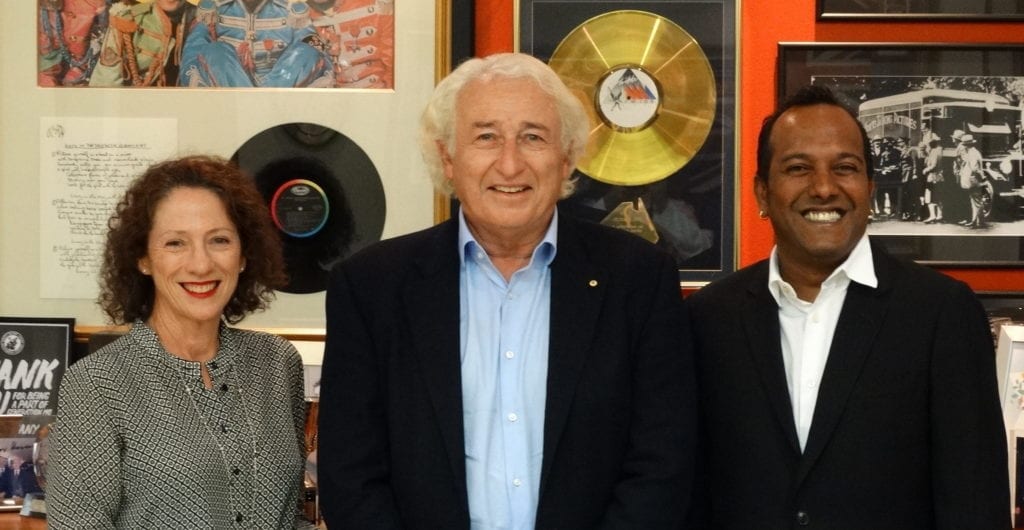
A former long-serving chief executive of Hoyts, Mr Ivany (right and inset, in 1996) put his high-flying corporate career aside around 15 years ago.

“I made the decision to spend 50 per cent of my time on boards and foundations, not for profit work, and the other 50 on my own business,” Mr Ivany said.

“I’ve largely stuck to that and I’ve been lucky enough to do it. If you’ve done well in life, you give back.”

Mr Ivany, of Point Piper, has spent time on the board or as chair of the following institutions: Sydney Swans Foundation, AFTRS, Sydney Film Festival, Jewish Communal Appeal, and the Museum of Contemporary Art. Now, at the National Institute of Dramatic Arts in Kensington, his influence has been tangibly felt.

NIDA has been constructing its $14m multidisciplinary graduate school, which is due to open by the end of the year.

“This project, once it is complete, elevates us to one of the very top drama schools in the world,” he said.

“It’s up there with RADA, Juilliard and Yale. It is an elite school.

“This is a place where, much like the AIS, with training people can reach the top of their passion.”

While Mr Ivany first began to work with foundations in the early 2000s, he noted the level of expertise and enthusiasm for the work had increased exponentially.

“20 years ago it was not the kind of thing people necessarily wanted to be a part of,” he said.

“Today, being on a foundation is a feather in your cap. It’s respected and it rounds you out as a person.

“In the end we all want a better community for our children. All of us making money just for ourselves is only a piece of life.

“Australians are recognising that you have to give back, it’s the right thing to do.”

Brand New Sydney Zoo Commences Construction

Work has officially commenced on the construction of the new $45 million Sydney Zoo in Western Sydney Parklands today with a ground breaking ceremony at Bungarribee Park.

The world-class 16.5-hectare attraction plans to open in early 2019 following 13 months of construction and will feature over 30 exotic exhibits featuring animals such as lions, tigers, bull sharks, cheetahs, and gorillas as well as an extensive range of native Australian animals.

Sydney Zoo Managing Director Jake Burgess says the Zoo is the first of its kind in Australia, with a strong focus on animal welfare and world leading exhibit design to replicate an immersive, safari-like experience for visitors.

“After researching and visiting 40 different local and international zoos we have incorporated state-of-the-art innovation and best practice animal welfare into our operation. We are confident that Sydney Zoo will be the most advanced of its kind in terms of education and sustainability, and will redefine the visitor experience. Visitors will enjoy elevated walkways and incredible proximity to the animals and our advanced display techniques and ultra-modern technology will improve the visibility of the animals in their habitats.”

“We plan to become an integral part of the communal breeding programs run under the Australasian Species Management Program, which includes both international and Australian facilities.”

“Sydney Zoo will be a real asset for the local community. We believe that the experiences it will deliver will bring people together and it will become a much loved destination for the people of Western Sydney.”

With the construction program beginning next month, the new Zoo is unique in that it features a wholly integrated Aboriginal and natural heritage exhibition, with Rangers from the local Darug people of Western Sydney – the traditional custodians of the land on which it will be built – employed to facilitate educational workshops with tourists and visitors on their culture and history. This has been developed in partnership with Muru Mittigar, a Darug Aboriginal organisation.

New South Wales Minister for Western Sydney, Stuart Ayres, said the Zoo is set to become a core part of Western Sydney’s social and cultural infrastructure.

“Sydney Zoo will generate an expected $45 million per annum contribution to the NSW economy and attract up to one million visitors each year. It will create 160 full-time jobs during construction, and 120 full-time jobs during operation.”

Sydney Zoo will also engage with local educational facilities, partnering with Western Sydney University (WSU) by way of an educational sponsorship which will see students participating in animal rehabilitation as well as technology design.

Commenting on the proposed partnership, Dr. Andy Marks, Vice Chancellor of WSU said: “It’s a game changer in every sense of the word, from engineering applications and device enabled interactions with the Zoo, through to the traditional things like vet science; the Zoo encapsulates a whole range of activities the University does, and we’re really excited about it.”

Sydney Zoo will also be offering jobs training for its employees, as it looks to partner with TAFE in development of a range of Cert III and Cert IV qualifications for its employees.

Built within the 200-hectare Bungarribee Park in Western Sydney Parklands, the Zoo will attract families from Western Sydney as well as international tourists, and will feature:

1. World-class animal exhibits divided into four precincts: African Grasslands, African Highlands, South East Asian Tropical, and Cumberland Plain Woodlands

2. Reptile and Insectarium, Aquarium, Nocturnal House and Education Arena

3. Integrated Aboriginal and natural heritage program

4. Restaurant, kiosks, picnic areas, gardens, wetlands and waterways

Bungarribee Park is a major recreational and tourism hub in Western Sydney Parklands that stretches 27 kilometres from Quakers Hill in the north to Leppington in the south. With 5,280 hectares of green open space the Parklands provides better access to green open space will benefit the health and well-being of the community into the future.

MEDIA CONTACT

Red Agency

P: 02 9963 7736

E: sydneyzoo@redagency.com.au

Cage Free Western Sydney Zoo

CAGE FREE WESTERN SYDNEY ZOO TO BRING VISITORS ‘FACE TO FACE’ WITH ANIMALS

The NSW Government has approved the lease of a 16.5-hectare area of land in Western Sydney Parklands for the development of state-of-the-art wildlife attraction. The consortium building Sydney Zoo, backed by Director Peter Ivany, Executive Chairman of the Ivany Investment Group and former Chief Executive of Hoyts Cinemas, is proposing a new type of cage-free animal attraction featuring elevated walkways offering opportunities to view lions, cheetahs, elephants, wildebeest, giraffes and rhinoceros. The $36 million attraction will also feature glassed observation areas for aquatic life including hippopotamus and crocodiles; Australian reptile and nocturnal animal houses; and native waterways with animals that include bull sharks. Sydney Zoo Managing Director Jake Burgess said he hoped to attract Sydney families to the zoo which will have large open spaces, explaining “we’re going for a smaller number of large enclosures with large animals. “79% of our audience in the immediate vicinity is families. They have a choice, they can drive for an hour to get to Taronga or not participate.”


The NSW Government has approved the lease of a 16.5-hectare area of land in Western Sydney Parklands for the development of state-of-the-art wildlife attraction. The consortium building Sydney Zoo, backed by Director Peter Ivany, Executive Chairman of the Ivany Investment Group and former Chief Executive of Hoyts Cinemas, is proposing a new type of cage-free animal attraction featuring elevated walkways offering opportunities to view lions, cheetahs, elephants, wildebeest, giraffes and rhinoceros. The $36 million attraction will also feature glassed observation areas for aquatic life including hippopotamus and crocodiles; Australian reptile and nocturnal animal houses; and native waterways with animals that include bull sharks. Sydney Zoo Managing Director Jake Burgess said he hoped to attract Sydney families to the zoo which will have large open spaces, explaining “we’re going for a smaller number of large enclosures with large animals. “79% of our audience in the immediate vicinity is families. They have a choice, they can drive for an hour to get to Taronga or not participate.”

A KPMG report suggests the zoo will contribute around $45 million a year to the NSW economy and $3 million in extra tourist spending. Commenting on the attraction, NSW Environment Minister Mark Speakman stated “since Taronga Zoo was first established 100 years ago, Sydney’s population has absolutely ballooned. “We think now there is room another world-class zoo here in western Sydney.” The proposed zoo, adjacent to Bungarribee’s new picnic and playgrounds, will be a popular new attraction to Western Sydney, bringing family fun, recreation and ecological education to visitors, and adding to the already great assortment of recreational activities available in the Western Sydney Parklands. “The focus on native animals and Indigenous culture will be a highlight, and it will illustrate the dramatic and compelling stories of the local Darug people.” The new zoo, located next to the Great Western Highway, will, if approved, open in late 2017 and is expected to attract about 745,000 visitors a year.

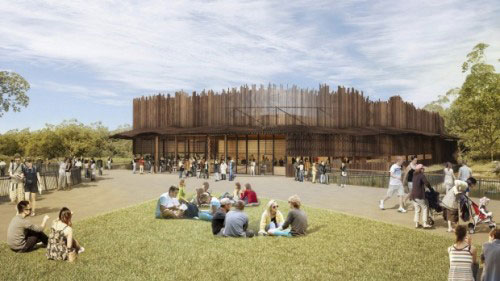
NSW Tourism Minister Stuart Ayres said Western Sydney was emerging as a dynamic new centre for tourism and recreation investment with world class facilities right in the backyard of two million local residents. Minister Ayres explained “the Sydney Zoo will be uniquely located to service the strong family and relatives market in Western Sydney and tap into the growing number of international tourists visiting the west of Sydney as they travel to and from the Blue Mountains.” Around 50 full-time and 50 casual positions are expected to be created when the Zoo opens. The Zoo is also in talks with Western Sydney University about potentially establishing a Centre of Excellence in Wildlife Conservation – a research facility housed on the Zoo site. Images: Artists impressions of the proposed Sydney Zoo, and its plan.